
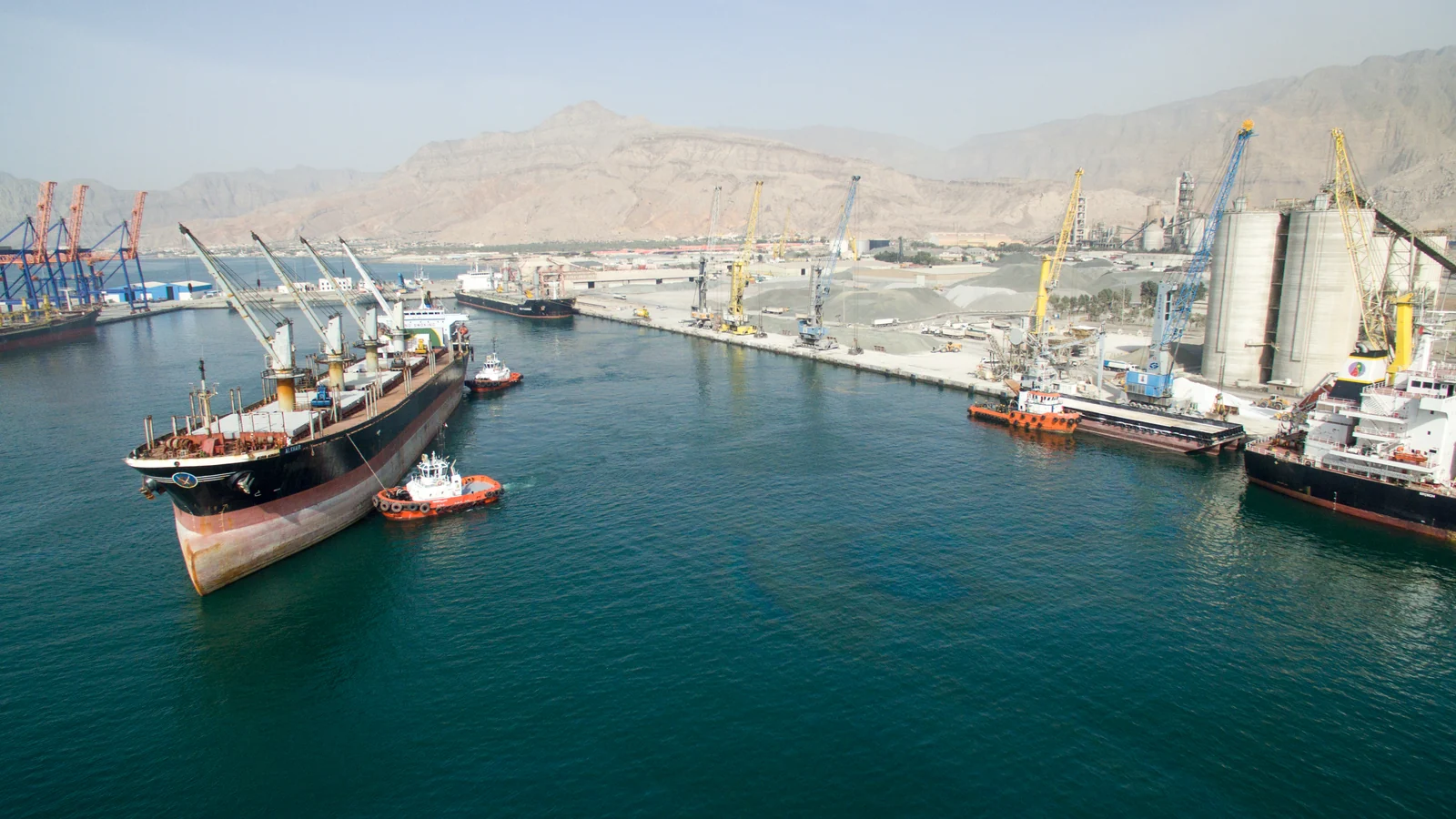
A Ras Al Khaimah factory signs a contract to produce components for a mainland customer. Its sales team then proposes a separate consultancy engagement. Both contracts would use the same free-zone company and bank account. The tax question turns on the activity, counterparty and facts behind each sale. One separately contracted service can change the company's tax position for several periods.
The UAE Corporate Tax Law sets a 0% rate on Qualifying Income of a Qualifying Free Zone Person (QFZP) and a 9% rate on its taxable income that does not qualify. Cabinet Decision 100 of 2023 specifies how to determine Qualifying Income. Ministerial Decision 229 of 2025 sets out the activity rules and the de minimis threshold. Issued on 28 August 2025, it repealed Decision 265 of 2023 and specifies an effective date of 1 June 2023. Review old working papers that still cite the earlier list. [1][2][3][4]
Confirm the entity qualifies before calculating the rate
Start with the legal entity and the location of its operations. Confirm the relevant site's status with the free-zone authority. A Corporate Tax Free Zone and a Designated Zone used for particular tax rules have distinct definitions. Identify the premises involved in each activity, especially where the company leases more than one site or outsources handling. The RAKEZ operating model guide helps connect the licence and facility choice to the activity the entity will actually perform. [2][7]
Article 18 requires adequate substance, Qualifying Income, compliance with the arm's-length principle and relevant transfer-pricing documentation, and no election into the standard Corporate Tax rates. The ministerial rules also require the company to satisfy de minimis and prepare audited financial statements. Decision 84 of 2025 applies to tax periods beginning on or after 1 January 2025 and includes QFZPs regardless of revenue. These are ongoing conditions. A company that has verified its customer mix still needs to demonstrate where and how it earns the revenue. [1][2][3][5]
For substance, locate the core functions that create the income and document the people, assets and operating costs supporting them. Where the law permits outsourcing, identify the provider, the place of performance and evidence that the company supervises the work. A production schedule, machine lease, payroll file and inspection record can show which functions happen in the zone. If a related business also performs some of the work, reconcile its charges to the arrangement and keep the transfer-pricing support with the Corporate Tax evidence trail. [1][2]
Classify revenue by the actual activity and customer
Open a separate record for each revenue stream before the first invoice. A counterparty registered in a free zone must be the beneficial recipient for the ordinary free-zone-to-free-zone route. The test concerns its right to use and enjoy the goods or services and whether it must pass them on under a contractual or legal obligation. A mainland or overseas customer generally requires a Qualifying Activity for the ordinary route, and an Excluded Activity can prevent that treatment. Record the conclusion for the contract as performed. [2][3]
| Transaction to review | First classification question | Evidence to request |
|---|---|---|
| Sale to a free-zone company | Does it meet the beneficial-recipient test and is the activity outside the Excluded Activities list? | Customer registration and contract terms explaining its role |
| Manufacture for a mainland buyer | Does the company actually perform qualifying manufacture or processing? | Production records, material flow, specification and delivery |
| Separate advisory engagement for an overseas company | Is the work itself a Qualifying Activity under Decision 229? | Scope, personnel, relationship and evidence of delivery |
| Storage for another business | Does the operator provide logistics without taking title to the goods? | Warehouse agreement, inventory ownership and custody records |
| Trade from a Designated Zone | Do the physical route, goods and customer satisfy the distribution conditions? | Customs entry and evidence of onward sale or another eligible customer route |
A licensed manufacturer can also earn consultancy fees. Review whether the advice is necessary for or closely integrated with the manufacturing activity under the ancillary test. A standalone advisory agreement with a distinct deliverable deserves its own review. A contract with a foreign buyer is a transaction with a Non-Free Zone Person for this purpose unless the buyer itself meets the relevant Free Zone Person definition. The country shown on the invoice cannot establish eligibility. [2][3]
Check the additional audit step for designated-zone distribution
Decision 229 defines qualifying distribution by how the activity is conducted, the import route for goods entering the UAE and the type of customer. A reseller or a business that processes the items for onward sale can meet the customer test. The decision also identifies a public benefit entity route. If the business uses a Ras Al Khaimah port, the Saqr Port logistics guide can help document the route. Verify Designated Zone status for the actual site and shipment. [3][7]
FTA Decision 6 of 2026 applies to tax periods beginning on or after 1 January 2026. For the qualifying distribution activity it requires an independent auditor's agreed-upon procedures report in addition to the applicable financial statements. Build a file of customer licences, signed confirmations, sales records and import documentation. Submit the report by 30 days after the relevant Corporate Tax return deadline unless the FTA determines another date. The decision specifies consequences for failing to submit it. [5][6]
Calculate de minimis on the adjusted revenue base
Use the lower of 5% of total revenue for the test or AED 5 million. Compare that limit with the period's non-qualifying revenue. The calculation uses revenue. Maintain a separate calculation of the taxable income to which a rate will apply. The fixed cap becomes binding above AED 100 million in adjusted total revenue. For example, with AED 140 million in the test base, 5% is AED 7 million and the legal limit is AED 5 million. [2][3]
Start with all revenue, then apply the exclusions in Article 4(3) of Cabinet Decision 100 to both sides of the ratio. These include revenue attributable to a domestic or foreign permanent establishment, specified free-zone real-estate transactions and intellectual-property revenue outside the qualifying portion. Analyse these streams under their separate tax rules. Within the remaining base, identify revenue from Excluded Activities, non-qualifying activities with Non-Free Zone Persons and transactions with Free Zone Persons that fail the beneficial-recipient condition. [2][3]
Worked example: one engagement changes the outcome
Assume a RAK manufacturer has AED 12 million of total revenue after the relevant Article 4 adjustments. Its AED 420,000 of ordinary standalone consultancy income from non-free-zone customers enters the numerator. The applicable limit is AED 600,000, so it passes the de minimis test. Assuming the other conditions are met, Article 3(1)(d) of Cabinet Decision 100 can bring residual income within Qualifying Income. Income assigned to the separate rules for permanent establishments, certain property or non-qualifying intellectual property still needs its own treatment. [2][3]
Suppose an additional AED 220,000 standalone advisory contract falls in the same tax period. Adjusted total revenue rises to AED 12.22 million and the limit to AED 611,000. Non-qualifying revenue rises to AED 640,000, which breaches the threshold. Under Article 5 of Decision 229, the company ceases to be a QFZP from the start of that period and for the following four tax periods. Model the result under the ordinary Corporate Tax rules for the entity as a whole. The commercial margin on the new job cannot measure its total tax impact. [1][2][3]
Use the calculation before accepting the contract
- Have sales flag new work, customer types and business locations before issuing an offer.
- Have finance classify the revenue against the current decisions and attach the contract and counterparty evidence.
- Reconcile adjusted total and non-qualifying revenue to the ledger monthly. Include the potential effect of contracts likely to fall in the same tax period.
- Escalate ambiguous classifications, unexpected year-end revenue and forecasts close to the limit. The tax-agent verification guide explains how to check an agent and define the scope of a review.
- Prepare the audit file and check the Corporate Tax return deadline. The law generally requires filing and payment, if due, within nine months of the end of the tax period unless the FTA directs otherwise. [1][3][5][6]
Common questions about qualifying free-zone income
Does the AED 375,000 band protect a QFZP's taxable non-qualifying income?
The ordinary Corporate Tax band and the QFZP rates are separate. A company that retains QFZP status generally applies 9% to its entire taxable non-qualifying income. The de minimis threshold is a revenue test for eligibility and the treatment of residual income. [1][2][8]
Can a business with a 0% result skip registration or filing?
The Corporate Tax registration and filing obligations still apply to a QFZP. Keep the documentation showing why the income qualified, even when the calculation produces zero tax. [1][8]
Does an overseas buyer make a trading sale qualify automatically?
Check the actual goods, activity and customer route. Qualifying Commodities trading has its own product, pricing and activity conditions. Distribution has distinct location, import and customer tests. Choose the category that matches the transaction and retain the evidence for it. [3][4][6]
Official sources and editorial method
Sources checked on 12 November 2026. Numbered references support the official facts stated. CYUAE labels hypothetical examples and editorial analysis in the text. The image caption records the photograph’s context, source and licence.
- Ministry of Finance — Corporate Tax Law, Articles 3, 18, 19, 34, 48, 51, 53 and 55 ↗
- Cabinet Decision 100 of 2023 — Qualifying Income and de minimis ↗
- Ministerial Decision 229 of 2025 — Qualifying Activities, Excluded Activities and status conditions ↗
- Ministry of Finance — September 2025 announcement on Decisions 229 and 230 ↗
- Ministerial Decision 84 of 2025 — Audited financial statements ↗
- FTA Decision 6 of 2026 — Additional procedures for distribution in or from a Designated Zone ↗
- FTA — TAXP010, Free Zones and Designated Zones for Tax Purposes ↗
- FTA — Free Zone Persons basic tax information bulletin ↗