A buyer can be eligible to purchase within a Sharjah development without being entitled to acquire every property advertised elsewhere in the emirate. That distinction is easily lost when a sales conversation moves from “foreign ownership is permitted” to “this particular unit can be registered in your name”. The first statement describes a framework. The second needs evidence about the buyer, project, property and proposed legal right.
This guide focuses on that verification problem. It is not a market forecast or a recommendation of a development. Official sources were checked on 7 November 2026; the scenarios and decision tables are CYUAE editorial analysis. The objective is to turn a broad eligibility claim into questions that the Sharjah Real Estate Registration Department and the transaction's qualified advisers can actually answer.
Read the later ownership framework before relying on an old summary
Law No. 2 of 2022 amended Sharjah's real-estate registration framework. The official account describes ownership exceptions beyond UAE and GCC nationals, including ownership in development areas and projects under the council's regulations.[1] On 1 November 2022, the Sharjah Executive Council announced a decision permitting all nationalities to own real estate without a time limitation in real-estate development areas and projects.[2]
Related reference: UAE Real Estate Market in 2026: What the Official Data Means for Buyers and New Brokers.
Those are dated legal developments, not a new rule announced today. Their practical relevance continues: a Sharjah Real Estate Registration Department release reported by WAM on 14 October 2026 said 52 projects had received the relevant ownership approval by the end of September.[3] That historical count is not a current searchable list and does not establish the status of an unnamed development.
Some official web guidance still describes the older 2014 usufruct model.[4] Do not use that older summary alone either to rule out ownership or to classify a proposed purchase. Ask the registration authority which current route applies to the actual property and buyer.
Identify the property before asking whether foreigners can buy
A useful enquiry begins with a specific asset, not a brochure brand. Obtain the project's official name, relevant phase or building, plot or unit reference, developer or registered seller, and the right proposed in the draft contract. Explain whether the buyer is an individual or company and provide the relevant nationality or ownership information through an appropriate secure channel.
Ask whether approval covers the exact phase and property being offered. A familiar master-development name should not substitute for identifying the unit. Where a seller refers to a different name in an approval, request an explanation connecting the records before assuming they describe the same asset.
Related reference: Reading a UAE regulatory announcement: five questions that matter.
This approach also makes an adviser’s answer more useful. “Can I buy in Sharjah?” invites a general overview. “Can this buyer acquire this identified unit under this proposed registration?” directs attention to the decision that will determine whether the transaction can proceed as intended.
Distinguish ownership from a time-limited right
The words in a marketing headline should be reconciled with the contract and proposed registration output. Ask whether the buyer will acquire ownership or another defined right, whether any term applies, and what document will record the result. If the contract uses a term unfamiliar to you, obtain an explanation before agreeing that it is equivalent to ownership elsewhere.
Do not assume that two rights have identical transfer, financing, inheritance or expiry consequences merely because both permit occupation. Have the relevant adviser explain those consequences for the particular documents. The purpose is not to reject a time-limited right automatically; it is to know what has been priced and what the household or investor will actually hold.
| Decision | Evidence or clarification to request | Unresolved assumption to avoid |
|---|---|---|
| Buyer eligibility | Confirmation for the actual individual or legal entity | A friend's nationality or structure settles your case |
| Project approval | Authority confirmation tied to the identified project and phase | Every unit using a familiar marketing name is covered |
| Right acquired | Draft wording and intended registration output | “Ownership” in an advertisement defines the legal right |
| Registration stage | Explanation of the present and final records | Every sale-stage document is the final title |
| Future disposal | Advice on the actual right and contractual conditions | Sale, mortgage and inheritance work identically everywhere |
Separate an off-plan purchase from a completed property's record
For a completed property, begin with the existing registered position and the proposed transfer. For an unfinished unit, ask what record exists now, what the purchase will register at this stage and which later conditions lead to the final ownership document. This is a transaction enquiry, not an assertion that Sharjah follows the same sequence or terminology as Dubai.
Related reference: Living in Sharjah and Working Across Emirates: Calculate the Whole Household Decision.
A reservation receipt, initial contract and final ownership record answer different questions. Put each in its own place in the transaction timeline. If an intermediary describes all of them as “the deed”, ask for the precise document name and issuing authority.
The same discipline applies to payments. Establish which payment triggers which step, the lawful receiving party and the evidence that the step has occurred. Do not import another emirate's escrow assumptions into a Sharjah transaction without checking the applicable arrangements with the responsible authority and advisers.
A hypothetical comparison between two offers
Imagine a non-UAE buyer comparing an apartment in a development described as approved for international ownership with a cheaper property elsewhere. The first seller provides a clear unit reference and a route to authority confirmation. The second relies on a general statement that Sharjah has opened ownership to all nationalities.
The useful response is not to conclude that the first purchase is safe or that the second is impossible. Require the same evidence from both. Confirm the buyer's eligibility, the project or property basis, the right being transferred and the intended registration. A lower price is not a substitute for a missing answer.
Related reference: Sharjah Rental Disputes: Prepare the Claim, Evidence and Next Procedural Step.
Now suppose both routes are confirmed, but one proposed right carries a defined term and the other does not. The comparison has changed. Ask how the different legal positions affect the intended holding period, financing plans and exit options. Price should be assessed against what is actually acquired, rather than used to distract from the difference.
Obtain a transaction-specific cost assessment
This guide does not quote one universal non-UAE buyer registration percentage. Request a current written assessment for the selected transaction, buyer and property. Separate authority charges from developer administration, brokerage, financing, valuation, translation and optional assistance.
For every quoted amount, identify the payee, basis, payment trigger and refund treatment where relevant. Ask whether VAT is included in a professional or service-provider quotation instead of treating every line as an authority fee. Compare quotations on the same scope before deciding which is cheaper.
Keep enough financial flexibility for a legitimate clarification or correction. A purchase budget that funds the advertised price but cannot accommodate the verified completion costs is not yet a complete budget. A written assessment makes the gap visible before a deadline turns it into pressure.
Review company ownership as a separate case
A company buying a property needs its own eligibility and authority review. The 2022 amendment's official account also addresses reporting changes in a property-owning legal person's ownership, legal form or trade name.[1] Do not assume that registering an asset in a company makes later shareholder changes irrelevant to the property record.
Describe the actual structure to the registration authority and advisers. Identify who owns the entity, who can approve the purchase and who can sign. Ask what later changes need to be reported and what evidence should be retained. This is especially important where a proposed structure is being sold as a shortcut around a direct-buyer eligibility question.
Questions buyers need answered before committing
Does the 2022 decision mean every Sharjah property is available to every nationality?
The official decision identifies development areas and projects.[2] It should not be converted into an emirate-wide assertion about every property. Obtain confirmation tied to the actual asset and buyer.
Does a project's appearance in an old list settle its current position?
A dated list or announcement is useful background. It does not resolve a changed phase name, a different property reference or the current application requirements. Request the current answer for the transaction being proposed.
Can a broker's message replace the registration authority's answer?
A broker can help assemble the enquiry and explain the proposed transaction. Preserve the distinction between that explanation and the competent authority's confirmation. Retain the supporting record and any qualified advice, not only a screenshot of a confident sales claim.
What should the final completion check establish?
Compare the issued record with the intended buyer, property and legal right. Reconcile the charges and receipts, save the final documents and identify any remaining obligation. Completion means the intended registered outcome has been achieved, not merely that the last requested payment was made.
Official sources and editorial method
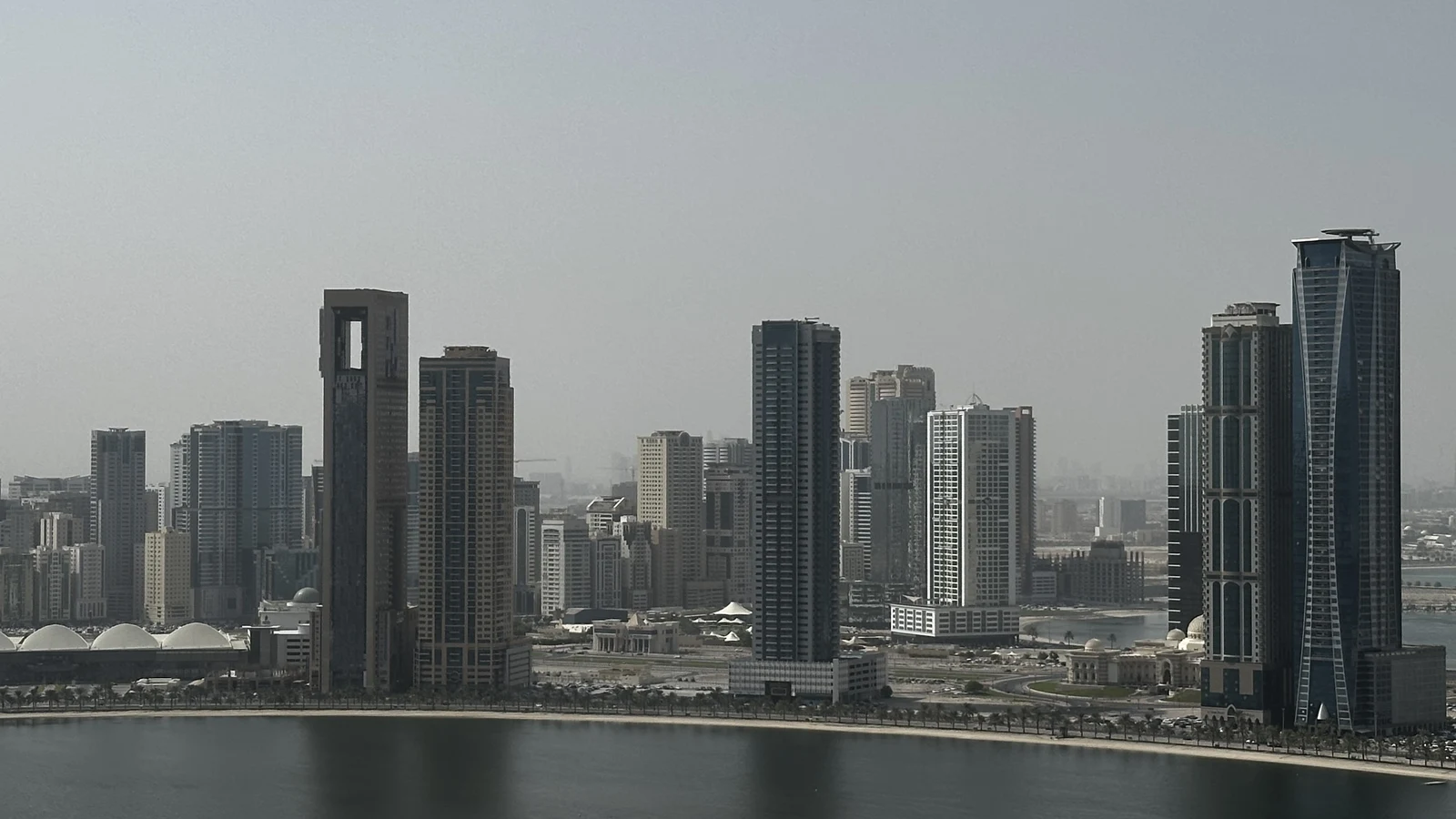
Sources checked on 7 November 2026. Numbered references support the official facts stated. Planning frameworks and hypothetical scenarios are CYUAE editorial analysis, not individual legal or tax advice. Photographs are contextual; image credits identify their source and licence. They do not document a particular application or case.
- WAM — Law No. 2 of 2022 amending Sharjah real-estate registration ↗
- Sharjah Executive Council — All-nationality ownership decision, 1 November 2022 ↗
- WAM / Sharjah Real Estate Registration Department — Approved projects, 14 October 2026 ↗
- UAE Government — Expatriates buying property, including older Sharjah usufruct guidance ↗