
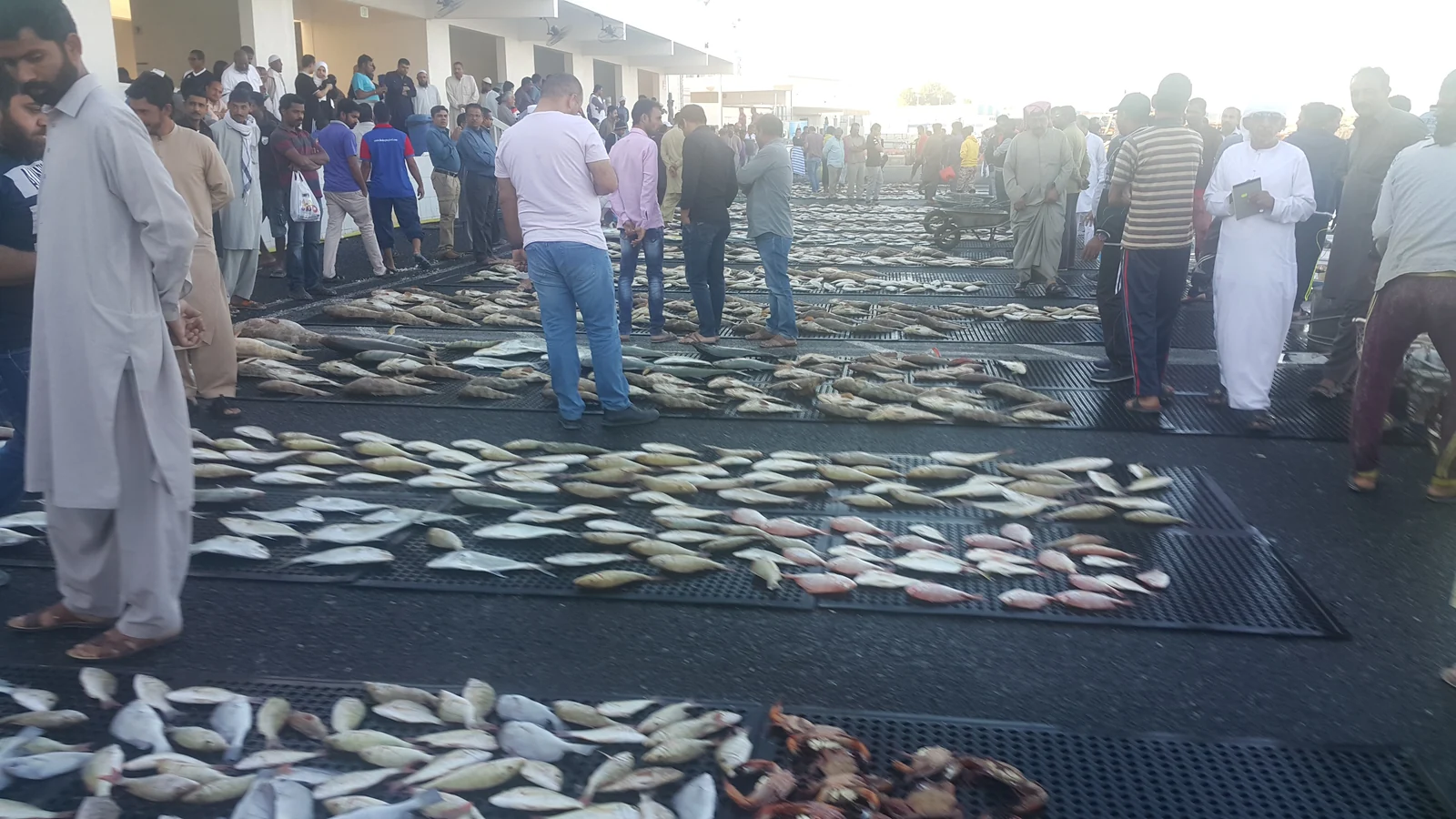
Ajman Fish Market works on two clocks. A stallholder can weigh and sell a fish while a visitor is still looking for the auction area. A cleaning or cooking counter can have its own queue and cutoff even when the fish counters remain open. Decide whether you have come to observe a working market, buy seafood to take home or arrange a meal nearby. Each plan asks different things of the same building.
Ajman's tourism authority locates the market on Sheikh Rashid bin Saeed Al Maktoum Street near the creek in the Al Rashidiya area. Its directions also use the label Musherif Commercial. Use the market's full name and street when setting a taxi destination or meeting point. The authority warns that parking can be difficult and suggests arriving early. [1]
Choose a session around what you want to see
Visit Ajman's destination page lists daily trading from 7am to 1:30pm and from 5pm to 10pm, with the evening auction from 6pm. Its downloadable visitor guide describes auction activity after 5pm and says timing is subject to change. Use 6pm as the published starting point for planning and confirm the actual start before making a special trip. The later number refers to the auction, while 5pm is the posted reopening time for the market. Neither identifies when a particular species or lot will appear. [1][2]
| Purpose | Sensible arrival plan | Confirm at the market |
|---|---|---|
| Compare stalls and buy raw seafood | Pick the morning or evening session and leave time for weighing and packing | Unit price, weight used for billing and whether the stall can pack the purchase for your journey |
| Observe the auction | Arrive early in the evening session and ask where observers may stand | Whether the auction will take place, the start time and whether visitors can participate |
| Buy fish and eat it nearby | Check the preparation counter or restaurant before you buy | Whether it accepts seafood you bring, the preparation fee and the latest time it takes orders |
| Observe the market with children | Set a short visit and pick a meeting place away from loading or serving activity | Where the group can stand without obstructing workers or customers |
The morning session suits a visit centred on purchase and a direct trip home. The evening session gives you a chance to see the auction and compare ordinary retail offers in the same outing. If you would rather see the waterfront as a public space, make that a separate stop using the Ajman Corniche guide. A seafood purchase introduces a storage constraint that a walk along the shore does not. [1][4]
Read the auction as part of a working supply chain
Visit Ajman describes fishing as part of local culture and identifies the auction as a feature of the market. The useful starting point is to watch what is being offered and who is doing the buying. An auction price can refer to a lot of fish, while a display counter may quote by the kilogram or by the piece. Keep the unit and the size of the purchase in mind before comparing the amounts. A buyer taking a batch for resale faces different storage and labour costs from a household taking one fish. [1][2]
If you want to watch, ask where visitors should stand. Give people handling crates, ice and scales space to work. Follow the staff's instructions about photography and ask before photographing people at close range. If you hear a price and want to understand it, ask after the exchange whether it was for the lot, the weight or a single fish. A few minutes spent identifying the unit of trade usually tells you more than recording a sequence of prices without their quantities.
The Ajman Museum guide gives the market visit a wider historical setting. The museum visit can explain how work and trade shaped the emirate. At the market, look for the present-day division of work: who sells the fish, who cleans it, who cooks it and which person can answer questions about where the product came from.
Agree the bill before handing over the fish
Visit Ajman describes bargaining and on-site options for cleaning and preparing fish. It also refers to restaurants nearby where some visitors can bring a purchase to be cooked. Ask the vendor and the preparation counter which of these services they offer for the fish you are considering. A vendor's recommendation can help you find the counter. Get the amount and service details from the person who will actually do the work. [1][2]
- Ask what the fish is and where it came from. A local market may carry seafood from different sources. Ask whether the stallholder can identify the species and origin or point to the relevant label.
- Confirm the unit before weighing. Ask whether the price is per kilogram, per piece or for a group of fish. For a whole fish, ask whether the quoted weight is before cleaning.
- Choose the preparation. Explain whether you want it left whole, scaled and gutted, cut into steaks or filleted. Ask which parts you will receive back.
- Price the services separately. Ask about cleaning, seasoning, cooking, sides and packaging where relevant. Find out who charges for each item and who issues the receipt.
- Confirm collection or seating. If the seller passes the fish to someone else, obtain a label or order reference and check where you will collect it. Ask about wait time if the group intends to eat nearby.
Worked example with illustrative prices
Suppose one stall quotes AED 32 per kilogram for a whole fish weighing 1.4 kg before cleaning. The purchase is AED 44.80. If cleaning is AED 6 and cooking is AED 18, the total is AED 68.80 before any other items. If you are cooking at home, compare AED 50.80 for the whole fish and cleaning with AED 50 for a ready-cut portion, provided both give you the amount you will actually cook. Conversely, a whole fish can suit a household that wants both fillets and the remaining parts for stock. Compare the weight you will use and the service you actually need. These numbers illustrate the calculation and do not describe current stall rates.
Keep separate receipts if the fish and its preparation come from different sellers. If the final amount differs from the agreed price, ask which line changed while the details are fresh. CYUAE's Ajman consumer complaint guide explains how to identify the business involved and preserve the relevant invoice if a dispute continues. The UAE Government portal also describes the supplier's duty to provide a dated invoice with transaction details. [3]
Plan cold storage and ask about provenance
When buying raw seafood, plan the journey home before paying. Bring an insulated bag and cold packs, ask for sealed packaging and keep raw seafood separate from food you will eat without cooking. Put the seafood into suitable refrigeration promptly. WHO food-handling guidance explains why clean handling, separating raw and cooked items and maintaining safe temperatures matter together. If your itinerary still includes several stops and you cannot keep a raw purchase chilled, put the market at the end or make the visit about observation and an immediately served meal. [4]
Ask what a vendor can tell you about the source of the fish and which alternatives are available. The UAE Government's fisheries overview describes management measures that can vary by species, season, location and fishing method. A retail visitor benefits from understanding why supply changes, without trying to infer legal catch status from appearance or from the fact that a fish is on display. If you are interested in the contrast between Ajman's market and a purpose-built waterfront food hall, the Souq Al Jubail guide suggests a way to compare seafood retail, buying routines and the space available to shoppers. [5]
Frequently asked questions
Is the 6pm auction time guaranteed?
It is the evening time listed on the destination page. The published tourism booklet places the auction after 5pm and explicitly allows for timing changes. Confirm before travelling, especially if watching the auction is the only purpose of your trip. [1][2]
Must I buy something to learn from the market?
Plan an observation visit and follow staff instructions about where you may stand. Compare two retail offers by unit, watch how orders move from the stall to the preparation counter, and ask a short question when the seller is free. Confirm separately if you want to bid in the auction. [1]
Will every nearby restaurant cook a fish I bring?
The tourism authority describes this as an option at nearby establishments. Confirm acceptance, preparation fee, waiting time and seating with the specific restaurant before buying. If it is busy or no longer taking orders, you can change the purchase plan while the fish is still at the stall. [2]
Official sources and editorial method
Sources checked on 13 November 2026. Numbered references support the official facts stated. CYUAE labels hypothetical examples and editorial analysis in the text. The image caption records the photograph’s context, source and licence.
- Visit Ajman — Fish Market location, daily trading hours, evening auction and preparation ↗
- Ajman Tourism — Official visitor guide, including the Fish Market and preparation services ↗
- UAE Government — Consumer protection and supplier invoice requirements ↗
- World Health Organization — Five keys to safer food handling ↗
- UAE Government — Regulating fishing practices and protecting fish stocks ↗